
University Eunuchs

If you enjoy Korean and Chinese historical dramas as much as I do, you’ll instantly recognize the stock character of “the court eunuch.” He is meek yet quietly powerful: a loyal servant who relays the king’s commands with kindness, standing in opposition to the scheming, evil nobles who seek to subvert the good ruler. In reality, kings were often flawed or tyrannical—and the eunuchs frequently worse. The Ming Dynasty of the 1500s is a notorious example.
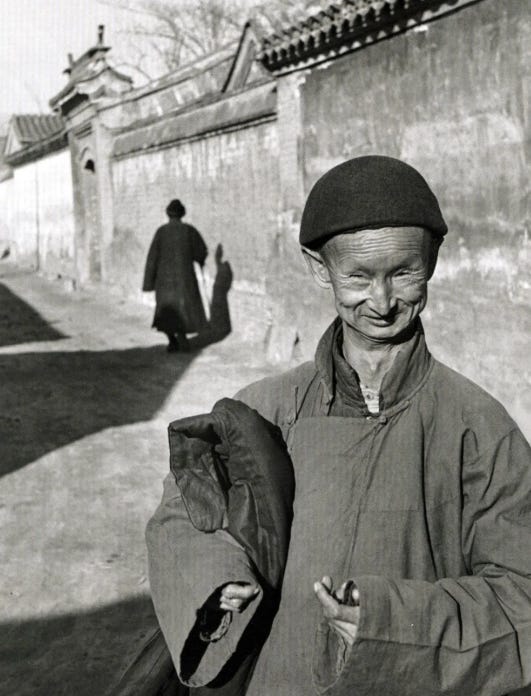
Most people don’t realize that in imperial China, many eunuchs were castrated voluntarily. If you were from the lower classes, being a eunuch was a sure way to keep yourself fed, and if you were talented you could rise to be more powerful than the Emperor himself. Sex isn’t everything. Tenure matters more.
The essay below, “The Male Academic Courtier,” was written by “An Anonymous STEM Professor.” I asked permission to publish it, and was told it was done with AI. That’s fine by me, though I am surprised he could figure out a prompt to generate these ideas.
I taught regulation at Indiana’s business school, and talked about “the four kinds of bureaucrats”. (I think the idea is from James Q. Wilson).
The first kind is the Ideologue. The Ideologue works in government because he wants to achieve something— less water pollution, break up corporations, fight crime, etc. The second kind is the Professional. The Professional is a scientist, economist, or lawyer who finds the work interesting and good experience but can and will jump ship to the private sector if any pressure is put on him. The third kind is the Politician. He isn’t literally a politician; he is someone who wants to use his government job as a stepping stone to go to another agency, to be a consultant, or to run for office.
The fourth kind is the Lifer. That is the University Eunuch, the Academic Courtier. He intends to stay in government for life and his greatest ambition is to be the highest official in the organization. The good of the agency is the good of the nation, as far as he is concerned. He hates risk and he loves following rules— he loves rules with a passion.1
I taught the four categories to my business students because it is crucial to knowing how to lobby. You need to use goals with the Ideologue, ideas with the Professional, publicity with the Politician, and agency power with the Lifer.
The male academic courtier
He is not a thinker first. He is a position-holder first.
His deepest motive is usually not truth, justice, or even ideology. It is moralized status stability. He wants to inhabit the role of the respectable, decent, enlightened institutional man. Everything else follows from that.
A true liberal administrator begins from:
fairness of process,
symmetry of standards,
tolerance for discomfort,
and the idea that even offensive arguments may contain truth.
The male academic courtier begins from:
what keeps the institution morally legible,
what protects his standing,
what aligns him with the approved class,
and what avoids reputational danger.
That is the core difference.
1. His moral vocabulary is instrumental
He will speak about:
respect,
inclusion,
safety,
collegiality,
values,
community.
But these are often not principles in the liberal sense. They are tools of selective enforcement.
A true liberal administrator uses principles to protect inquiry even when inquiry is awkward.
The courtier uses principles to manage people, especially people who create interpretive difficulty for the institution.
So when someone says something sharp but arguable, he does not ask:
Is it true?
He asks:
What kind of person says this? What risk does this create? What does tolerating this signal? Whom might it upset above me or around me?
That is not liberalism. That is bureaucratic feudalism in ethical language.
2. He treats consensus as evidence of virtue
The courtier is drawn to whatever the elite moral consensus already blesses.
Why? Because it lets him borrow legitimacy at low cost.
If feminism, DEI, inclusion language, or women-centered symbolic politics dominate the institution, he will not test them rigorously. He will assume that alignment with them is evidence of decency. That saves him from having to think too hard, and it allows him to present himself as morally evolved.
So he confuses:
conformity with goodness
approved language with wisdom
social safety with justice
A true liberal administrator does the opposite. He assumes consensus may be lazy, self-serving, or coercive, and so he keeps some distance from it.
3. He is especially hostile to unsanctioned male dissent
This is where your critique matters.
The courtier can tolerate many kinds of dissent if they come wrapped in the right language. He can tolerate left-coded dissent, procedural dissent, carefully softened dissent.
What he cannot tolerate is a man who:
refuses symbolic deference,
questions the moral authority of elite women,
speaks in first-principles rather than therapeutic language,
and does not seem to fear reputational punishment.
That kind of man presents a threat on multiple levels.
He threatens the institution because he cannot be smoothly categorized.
He threatens the courtier because he reveals that another mode of masculinity exists—one not built on compliance, apology, and moral submission.
So the courtier often responds by recoding such men as:
volatile,
uncollegial,
inappropriate,
unsafe,
embittered,
or defective.
This is not accidental. It is how the system immunizes itself from criticism.
4. He pathologizes what he cannot refute
A real liberal answers argument with argument.
The courtier often answers argument with diagnosis.
If a man sharply criticizes feminism, elite white women, or institutional asymmetry, the courtier will often infer:
grievance,
misogyny,
instability,
inability to adapt,
social deficiency.
Why? Because psychologizing the critic protects the framework.
Once the critic becomes “a difficult man,” the content no longer needs to be engaged. The man becomes the problem. His claims become symptoms.
This is one of the most important habits of the male academic courtier: he converts structural critique into personality disorder.
5. He depends on female-coded moral legitimacy
The courtier often derives part of his own moral identity from proximity to the institutionally approved feminine.
Not femininity in the broad human sense, but a specific elite form:
articulate grievance,
moral sensitivity,
symbolic anti-oppression,
emotional authority,
professionalized empathy.
By aligning with that, he becomes one of the “good men.”
That identity is socially lucrative:
women in power trust him,
administrators see him as safe,
peers see him as civilized,
he avoids suspicion.
But the price is subtle: he becomes unable to apply fully symmetric scrutiny to the female-coded moral order from which he draws legitimacy.
That is why he can become harsher toward dissenting men than toward clearly flawed women. The asymmetry is functional. His own moral standing is tied to it.
6. He mistakes suppression for governance
A liberal administrator thinks governance means:
protecting process,
holding standards evenly,
tolerating discomfort,
and preventing factional capture.
The courtier thinks governance means:
containing difficult people,
preserving appearances,
minimizing complaints from powerful moral constituencies,
and keeping the institution narratively clean.
So if there is conflict between:
a truth-seeking but abrasive man, and
a politically legible but intellectually mediocre moral order,
he will usually side with the latter.
Why? Because it is easier to govern appearances than truth.
That is why such men often seem superficially calm, decent, and reasonable while presiding over deeply one-sided systems. They are not trying to discover justice. They are trying to maintain administrative equilibrium.
7. He is usually a coward, but a refined coward
Not a melodramatic coward. A polished one.
He does not run from physical danger. He runs from:
moral ambiguity,
social risk,
elite disapproval,
and the possibility that the institution’s preferred victims are sometimes also aggressors.
He cannot afford that thought. Or feels he cannot.
So he wraps his cowardice in:
civility,
procedure,
values,
tone,
and concern.
That is why this type is so maddening. He is rarely openly tyrannical. He is ethically evasive. He hides domination inside moderation.
8. He is often animated by ressentiment toward stronger men
The courtier frequently has a subterranean resentment toward men who are:
more direct,
less deferential,
less dependent on institutional approval,
less fluent in self-castrating moral language.
He cannot say this openly, so he moralizes it.
What he feels as:
discomfort,
envy,
threat,
or inferiority,
he re-labels as:
concern,
ethics,
professionalism,
or safety.
That lets him attack upward in spirit while appearing to defend the common good.
This is why dissenting men often feel that the courtier’s response is not merely disagreement but something more intimate and punitive. It often is.
9. Why he differs from a true liberal administrator
A true liberal administrator can say:
I dislike how you are saying this, but you may be identifying a real asymmetry, and my job is to protect fair process while testing the substance honestly.
The courtier cannot do that.
He will say, explicitly or implicitly:
The way you are speaking proves you are outside the moral community, and therefore your claim does not merit equal standing.
That is the dividing line.
The liberal protects pluralism even when it is awkward.
The courtier protects legitimacy even when it is false.
10. Clean archetype
So the male academic courtier is:
institution-first, not truth-first
consensus-dependent, not principle-dependent
selectively empathic
harsh toward unsanctioned male dissent
reliant on female-coded moral legitimacy
prone to psychologizing critics
rhetorically ethical but substantively asymmetric
a manager of appearances more than a guardian of inquiry
His defining trait is this:
He experiences obedience to the reigning moral order as virtue, and any man who questions that order as a character problem.
That is why he is more dangerous than an open ideologue. The ideologue declares himself. The courtier pretends to be neutral.
Footnotes
No doubt some of the ladies will be saying, “What about women?”. Well, the eunuchs had their job because uncastrated men couldn’t be trusted in the king’s palace because the king’s wives and concubines were there, not to mention all the palace maids who did the cooking, sewing, and cleaning. Thus, there were plenty of women, more women than eunuchs, in fact. Do watch some of the palace dramas. I don’t know if they are realistic, but it seems the women’s lives were obsessed with court politics, trying to become the king’s favorite wife, trying to poison the other wives’ children, trying to get jobs for their relatives, trying to deface their rivals, etc. This might have a university analog but I haven’t seen it. We may see it as university administrations become 90% female.
Eric, I see you throughout the column (as the non-eunuch, of course). Was the "Anomynous STEM Professor" familiar with your situation?
My key authors—Arendt, Scott, Łobaczewski, Orlov, Scheidel, Le Bon, Toynbee, Graeber, and Jung—converge on a clear-eyed diagnosis of the current Canadian situation. Arendt sees in it the banality of bureaucratic evil: civil servants applying procedures without genuine moral judgment, as in the handling of complaints at the Bar or the expansion of MAiD. Scott recognizes in it the logic of high modernity: the state reduces human complexity (attachment to one's home, deep convictions, freedom of conscience) to simple administrative categories, producing an uncorrectable visibility. Łobaczewski speaks of a soft pathocracy, where the system naturally selects those who adapt to the coldness of procedure. Orlov sees in it the first signs of political and social closure, while Scheidel sees a rigidification of the elites that blocks mobility and accumulates tensions. Toynbee would diagnose a petrification of the creative elites who have become dominant: instead of responding creatively to challenges, they protect themselves with administrative and ideological routines, accelerating the internal decline of a civilization. Graeber would emphasize the absurd and violent bureaucratic dimension: the system imposes useless and restrictive rules that stifle human imagination and creativity, transforming citizens into mere subjects. Jung, with his concept of enantiodromia (the swing of the pendulum), would add that any tendency pushed to extremes eventually generates its opposite: the more technocratic and administrative closure intensifies, the more it generates existential fatigue and resistance that, at some point, will tip in the other direction. Le Bon would finally remind us that people tolerate this closure for a long time as long as the discourse remains coherent, but that a saturation point can be suddenly crossed, leading to a brutal and emotional reversal. In Canada, we are not experiencing violent persecution, but rather a profound and insidious transformation: a legal, administrative, and cultural closure that wears us down slowly rather than striking us directly, while simultaneously creating the conditions for its own future rejection. We are not returning to the world as it was before; we are moving toward a new configuration where the tension between technocratic control and human resistance will remain permanent.
In Quebec and Canada, we are not (yet) in a situation of “civil war” in the classical sense of the term, like the one some European analysts fear for the United Kingdom or France. Rather, we are in an advanced stage of societal fracture and institutional closure, which already exhibits several precursors of a gradual balkanization. The most visible division is regional and cultural: Alberta and parts of the Prairies feel increasingly alienated from Ottawa, perceived as a centralizing elite that imposes policies (carbon tax, energy restrictions, mass immigration) contrary to their economic interests and their identity. In Quebec, the tension is twofold: on one side, a historical resistance to federal centralisation (Legault and Quebec nationalism), on the other, a growing divide between rural/traditional regions and large urban centres (Montreal especially), where the demographics are changing rapidly and where debates on identity, secularism, and reasonable accommodation remain lively. This divide is not yet violent, but it is deep and is being expressed.