

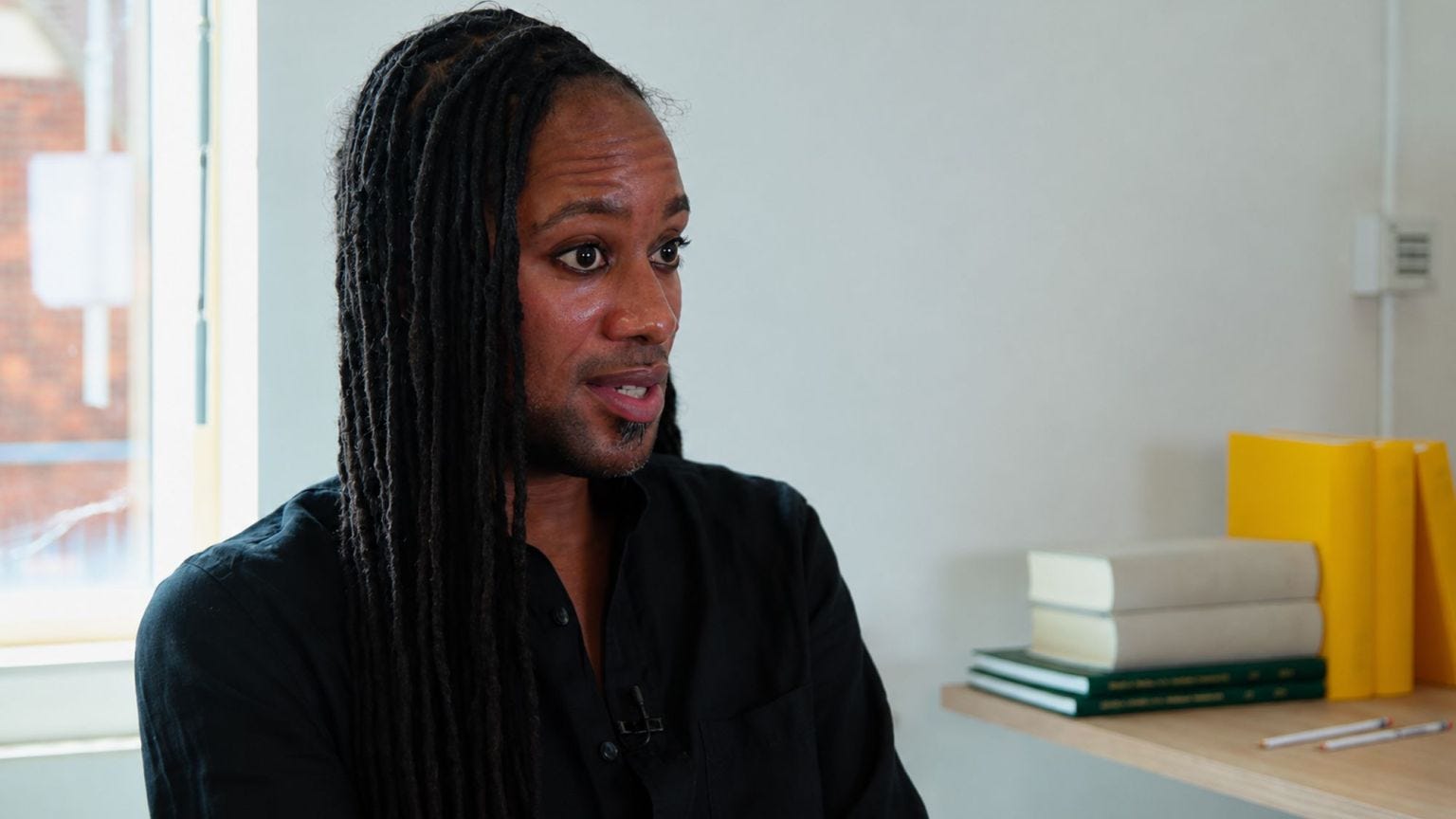
Jason Arday was appointed Professor of Sociology of Education (in its Faculty of Education) at Cambridge University in 2023. Since then he has been found to be an incredible liar and a miserable scholar. Some items:
He says he starred in ITV’s Seven Up! documentary series, but it was only for children born long before he was born.
He says he raised £5million for charity but can’t give details because he signed a nondisclosure agreement
He says a pig’s head was sent to his family home and police visited butchers to investigate, but the police and butchers say this never happened.
He ran 30 marathons in 35 days, the last nine after sustaining a hairline fracture in his leg, and covered 600 miles in six days. (I hear that one Eddie Izzard ran 43 marathons in 51 days, so 30 in 35 is humanly possible).
He plagiarized dozens of passages in his dissertation. He also plagiarized in his publications.
His writing is closer to that of undergrads than to faculty. Errors include: diagoneses, enviably (for inevitably), mental facilities (faculties), persistence nature (for persistent), etc.
Arday claimed to work on projects abroad for the charity WaterAid, which said they never send volunteers abroad.
Cambridge or Arday hired Carter-Ruck, one of the United Kingdom's leading defamation law firms, to threaten journalists thinking of reporting on all this. The police also threatened one journalist because he was asking questions that upset Arday, which apparently is a crime in England.
His thesis title, "An Exploration of Peer-Mentoring among Student Teachers' to Inform Reflective Practice within the Context of Action Research," has a punctuation error.
He invented the data in some of his articles, claiming he had interviewed subjects when clearly he had not.
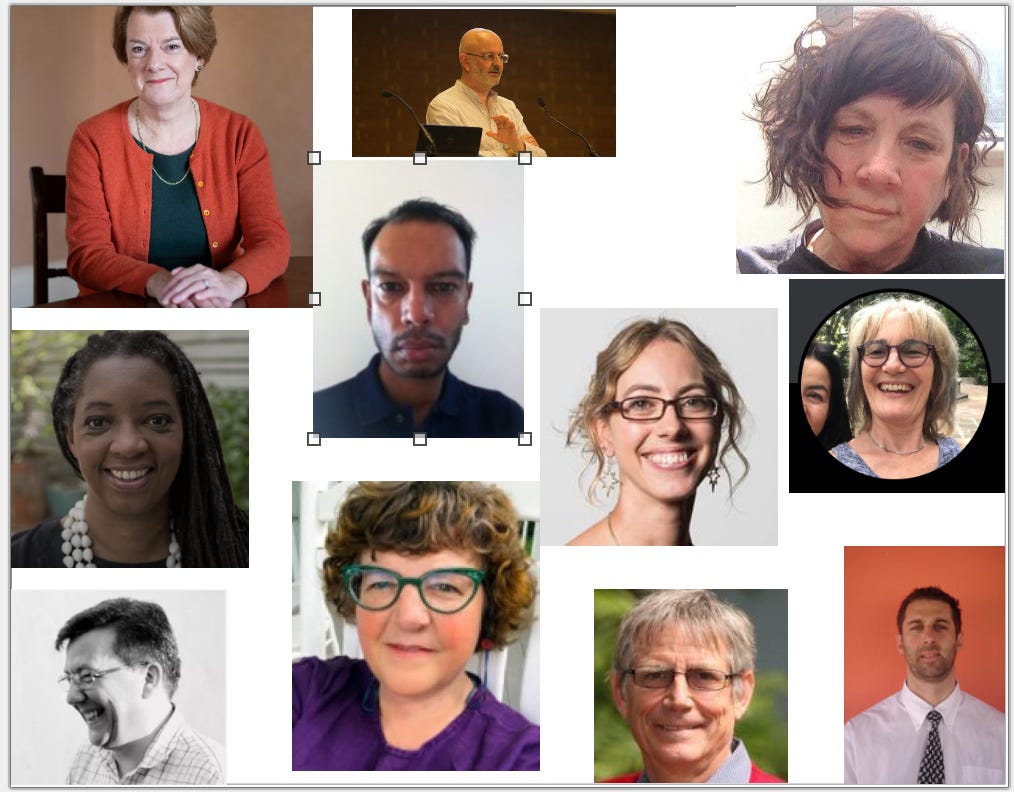
I know of other amazing items—someone on X has a 37-item list, though in the day since it was written more came out—- but I didn’t intend to write on Arday, but on those who appointed him. Arday himself resigned August 5. Pictures of the people involved in his appointment are at the start of this Substack. The Cambridge University Reporter No. 6664, 29 June 2022. and David Wooton tell us that:
The Board that appointed Arday: Baroness Sally Morgan (Fitzwilliam); Professors Anoop Nayak (Newcastle); Louise Archer (UCL); Jo Dillabough (Cam); Tim Harper (Magdalene); Michalinos Zembylas (OU Cyprus); Karen Coats (Homerton); Martin Mills (UCL); Paul Ramchandani (Wolfson).
and
This is not a lightweight panel. Zembylas has the most citations; all have a proper scholarly record in education, sociology, history. So did they read the work? And if they did how could they persuade themselves it was of the level appropriate for a Cambridge chair?
Two-thirds of the Board had to vote for Arday for the appointment to go through.
Professor Hilary Cremin is Head of the Faculty of Education, and told the BBC that the Board had been unanimous in recommending Arday.
Pro-Vice-Chancellor for Education Bhaskar Vira was probably involved.
Professor Phil Vickerman was Arday’s thesis advisor.
Arday was both a Professor of Cambridge University and a fellow at Jesus College. He was elected by the Members of Council: the Master, the President, the Senior Tutor, the Bursar, and twelve Fellows or Emeritus Fellows (elected by the Society), but without the participation of the four student members. Sonita Alleyne (also referred to as Ms Sonita Alleyne OBE) has been Master since 2019.
Below I include bio information on all these people. I also include email addresses. I intend to email each. Here is my letter:
Dear Professor X,
I am writing in an effort to learn how Jason Arday was appointed as a Professor at Cambridge University. I am a retired Indiana University economics professor with a pretty good vitae, best known for my book Games and Information published by Blackwell. I am not first-rate, but I went to Yale and MIT and I’ve been a visiting scholar at Oxford-Nuffield, Harvard Law (twice), Harvard Econ, Yale Law, and Chicago Bus. So I hope you will take me seriously.
Did you vote in support of the hire? If so, how would you justify your decision? Did you read any of Arday’s work? Did you know of his fanciful claims such as the 30 marathons? Do you regret your decision?
Without knowing the answers, I and everybody else will believe that you have no justification for Arday’s hire except his race, that you did not read his work, that you care nothing about scholarly quality, and that you don’t care about lying. If you did oppose the hire, this is your chance to make that public. I myself would have resigned from the hiring committee if it were to recommend someone like this.
I have included this letter on a Substack I have written at https://ericrasmusen. substack.com/p/who-hired-the-ridiculous-jason-arday. I will be happy to append anything you may write on the affair.
This may be your chief legacy. We like to think our articles and books are what will be remembered, but when someone googles you in 50 years, it is this affair which will most likely come up.
master@fitz.cam.ac.uk anoop.nayak@ncl.ac.uk l.archer@ucl.ac.uk jd217@cam.ac.uk tnh1000@cam.ac.uk m.zembylas@ouc.ac.cy ksc38@cam.ac.uk martin.mills@ucl.ac.uk Pr441@cam.ac.uk (Paul Ramchandani's email, which I'm told is no longer working as of August 20) hc331@cam.ac.uk master@jesus.cam.ac.uk
Baroness Sally Morgan became Fitzwilliam College’s ninth Master on 1 October 2019. Sally Morgan was born and went to school in Liverpool. She is a Labour peer, worked for eight years in 10 Downing Street and was Minister for Women and Equalities.
I am a Social and Cultural Geographer who has specialisms in race, ethnicity and migration; masculinities and social change; youth transitions and inequalities. I studied at the Centre for Contemporary Cultural Studies (CCCS), University of Birmingham, before undertaking research posts, exploring the perpetrators of racist violence with (Les Back & Roger Hewitt), and research on sexuality and schooling. I held a Lectureship in Media and Cultural Studies at Liverpool John Moore's University. The connections emerging between Cultural Studies and Geography, led me to undertake a funded PhD in Human Geography at Newcastle University exploring young people, race and whiteness.
I am currently the Karl Mannheim Professor of Sociology of Education at UCL IOE (2017-) and co-chair of the Centre for Sociology of Education and Equity (with Jessica Ringrose and Caroline Oliver). My research seeks to understand educational identities and inequalities, particularly in relation to social class, gender and race/ethnicity across primary, secondary, higher and informal learning contexts.
I began my academic career as an ethnographer during my doctorate which I undertook in Canada at McGill University. At the start of my doctoral student trajectory I sought to better understand how young people came to know about Indigenous human rights' issues and how non-Indigenous youth and teachers understood them as expressions of culture society knowledge and power. I was also interested in the part played by social and cultural media popular knowledge forms histories of colonialism and political culture in mediating these expressions.
Professor Harper's research interests centre on the history of modern Southeast Asia and the region's global connections. His first book, The End of Empire and the Making of Malaya (1999), was a study of war, communist rebellion and the achievement of independence in Malaya and Singapore. Since then, he has published, with Christopher Bayly, a two-volume account of the Second World War and its aftermath in South and Southeast Asia, Forgotten Armies (2004) and Forgotten Wars (2007).
Michalinos Zembylas is Professor of Educational Theory and Curriculum Studies at the Open University of Cyprus and an Honorary Professor at the Nelson Mandela University in the Chair for Critical Studies in Higher Education Transformation. He has written extensively on emotion and affect in relation to social justice pedagogies, intercultural and peace education, human rights education and citizenship education. His recent books include: Psychologized Language in Education: Denaturalizing a Regime of Truth (with Z. Bekerman), and Socially Just Pedagogies in Higher Education.
Paul Ramchandani is LEGO Professor of Play in Education, Development and Learning at the University of Cambridge. Paul also works as a Consultant Child and Adolescent Psychiatrist in the UK National Health Service and was previously Professor of Child and Adolescent Mental Health at Imperial College London. He trained as a doctor in Southampton and then in public health at the London School of Hygiene and Tropical Medicine in London and in child and adolescent mental health in Oxford. Paul’s research has focussed on mental health and he has a particular interest in the development of play and the prevention of emotional and behavioural problems in the early years of life.
Martin is the former Head of the School of Education, at The University of Queensland, Australia. He is a Fellow of the Academy of Social Sciences Australia, and has held Visiting Professorships at Kings College London, Roehampton and Queen’s Belfast. He is the Immediate Past President of the Australian Association for Research in Education. He holds an Honorary Professorship at The University of Queensland. His most recent books are Reimagining schooling for education; Re-engaging young people in education: Learning from alternative schools; and The politics of differentiation in schooling. He is an editor of Discourse: Studies in the Cultural Politics of Education. Martin is a former high school English history teacher.
Professor Hilary Cremin is a senior professor in the Faculty of Education. She co-chairs the THRiVE research group, whose professors and researchers investigate human thriving in and through Education. This includes topics such as wellbeing, peace education, conflict, equity, inclusion and social justice.
Sonita attended a comprehensive school before going to Fitzwilliam College in Cambridge. A career in radio followed, and she founded production company Somethin’ Else which she led as Chief Executive from 1991 until 2009. Sonita also worked as a journalist and broadcaster, hosting and contributing to weekly shows for Greater London Radio, BBC Four and BBC Five.
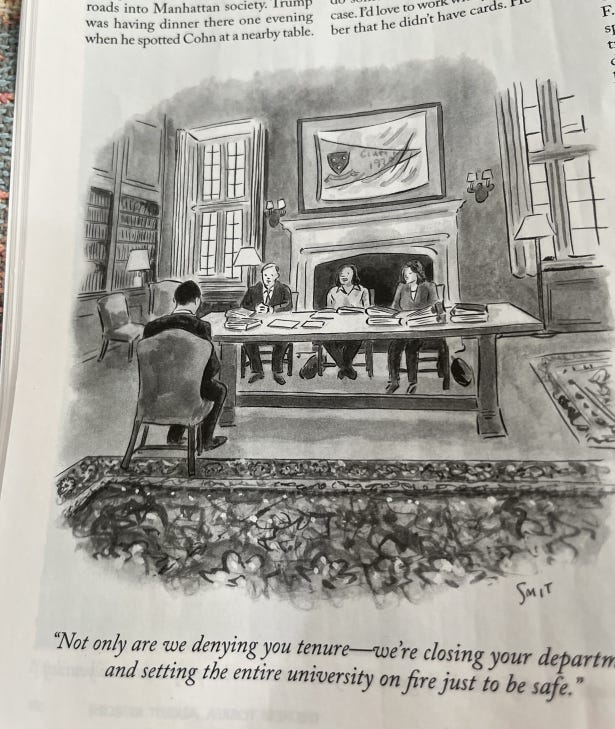
If you like this, you might also like “ ‘We’ll Just Have to Drop the Sociology Department’”.. Education, Women’s Studies, Criminal Justice, Communication, and Anthropology should also be examined for deletion.
This Substack has gotten 20,000 views in the first day and a half, a record for me. It settled down around 48,000. I wish I had inserted an ad earlier. If you want to stop things like the Arday Affair, you might like to join the MIT Free Speech Alliance (MFSA), one of the many groups that cooperate in the Alumni Free Speech Alliance (AFSA), or the British Free Speech Union that Toby Young started. Any of these groups can also help you start a watchdog organization for your own university.
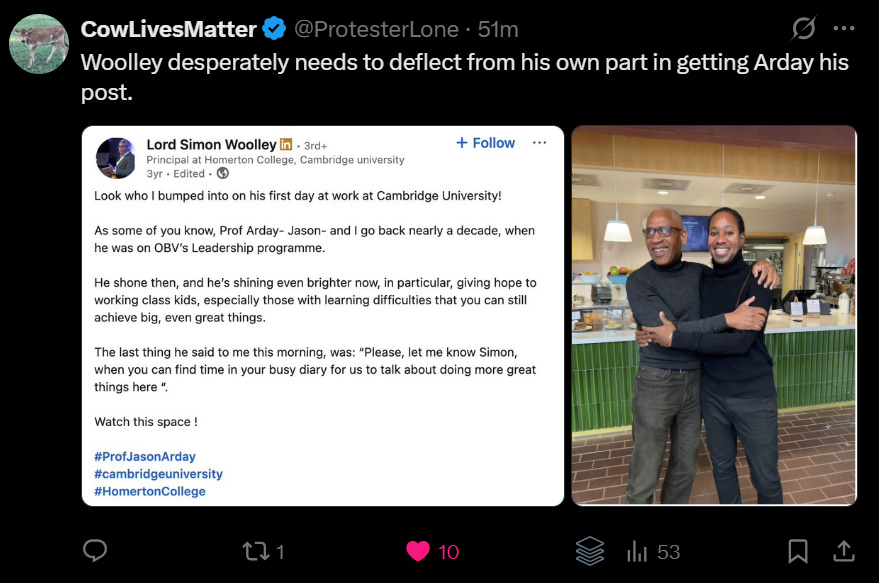
August 16: Lord Wooley should be added. He is calling for an investigation into the media attacks on Jason Arday.
Making public this circle is probably the most important move that can be made at the moment. For it is they that bear the responsibility for this debacle. They have jointly and severally brought a world renowned institution of higher learning into disrepute and they ought to bear the consequences of their choices.
One need only look at what is happening:
https://x.com/julianhuppert/status/2084243613374947651?s=20
But the list is incomplete: every single examiner and member of a selection committee that was involved in any of Arday's hires along the way to his Cambridge appointment should also be held to account.
In this whole sorry affair we read of "institutions". This masks that there are actual people making actual choices. And each does indeed stand answerable.
I have taken your initiative Eric, and wrote to all these electors as well, pointing them to the Bayreuth affair that I posted elsewhere. Here is the text of my letter:
Dear Colleague,
It has come to my attention that you may have been involved in the appointment of Jason Arday. In this regard, that appointment has brought Cambridge University’s reputation into disrepute. The following X-feed had nearly 0.5m views this morning:
https://x.com/julianhuppert/status/2084243613374947651?s=20
The affair is harming the entire academic community.
In this regard, the affair took me back to Bayreuth in 2011, when a regional Bavarian university found itself at the centre of a national crisis. Karl-Theodor zu Guttenberg — Defence Minister, poster boy of the CSU, the Bavarian half of Merkel's then coalition — was exposed for plagiarising his doctorate. I watched my own university blink. It stripped the degree, but on narrow administrative grounds, declining to find that the he had deliberately deceived. The technical route minimised the damage to him.
What saved Bayreuth's integrity, however, was that its own professors refused to accept this. Oliver Lepsius, the constitutional lawyer who then held the Bayreuth chair of Guttenberg's own supervisor and has since moved to Münster, said publicly what the institution would not: "We feel deceived. We were taken in by a fraudster." The dam broke there. Pressure from the professoriate built through the following weeks, and my friend and colleague Rainer Hegselmann, professor of philosophy and the driving force behind the Philosophy & Economics degree that made Bayreuth internationally known, wrote to the University President: "by such finesses the university effectively makes itself the accomplice of a fraudster" (“Komplize eines Betrügers”). The university's own commission concluded in May 2011 that the deception had indeed been deliberate. It did not get there on its own.
The lesson for Cambridge is that no institution has ever protected its reputation by protecting misconduct. Deference to a powerful politician and deference to a high-profile professor produce the same result: the erosion of public trust, and with it the value of every degree the institution confers. Bayreuth is no Cambridge. But when the moment came, its professors did their duty.
Sincerely,
Matthew Braham